Crazy about Critters
Wildlife Viewing in Yellowstone
Bison, elk, bears, and wolves are among the stars at the world’s first national park. Yellowstone National Park, along with harboring the world’s highest concentration of geysers, fumaroles, and other geothermal features, offers spectacular wildlife viewing. It is home to more free-roaming wildlife than anywhere else in the Continental U.S.
Almost 70 mammal species and over 300 bird species call Yellowstone home. Everything from bears and beavers to songbirds and bald eagles can be found in the park’s meadows, valleys, and canyons or flying high in the sky and perched on treetops.
In Lamar Valley, among the most wildlife-rich areas of the park, you might spot bison, elk, black bears, grizzly bears, wolves, and other wildlife. It’s thrilling to see these wild creatures in their native habitat as they hunt, graze, mate, and roam the park.
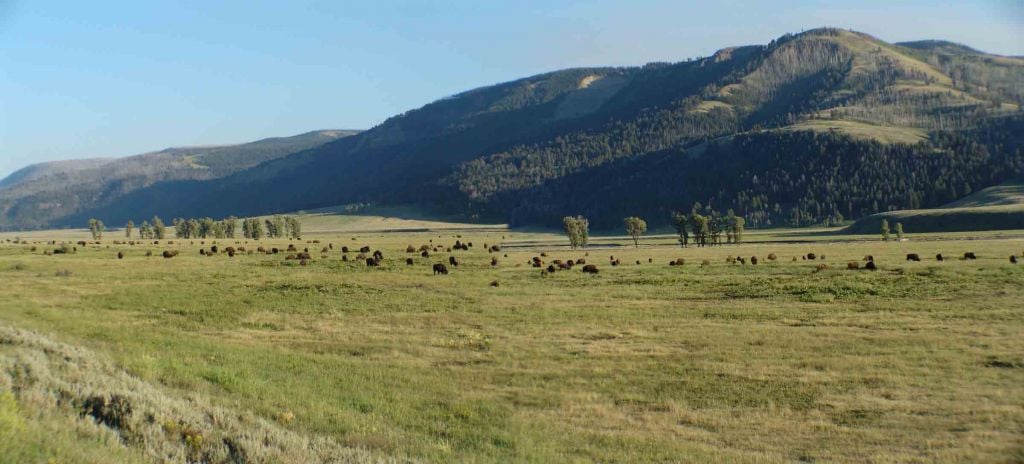
Bison in Lamar Valley
But what you see in Lamar Valley, and other areas of the park, depends on the time of day, the season, your equipment, and your expertise. Since animals are most active in the early morning and late afternoon, schedule your prime viewing for those times. To make the most of your wildlife watching, bring binoculars or a high-powered spotting scope. Also, consider one of the guided wildlife-watching tours below. Our guides are experts and know the latest sightings and how to locate even the hard-to-see animals.
Spring, Summer, & Fall Wildlife Tours
Evening Wildlife Excursion from Canyon Lodge
Lamar Valley Wildlife Tour in Autumn from Mammoth Hot Springs Hotel
Morning with the Wild Things from Canyon Lodge
Picture Perfect Photo Safari from Lake Yellowstone Hotel & Cabins
Wake Up to Wildlife from Mammoth Hot Springs Hotel or Roosevelt Lodge
Wonderland Wildlife Excursion from Mammoth Hot Springs Hotel
Winter Wildlife Tours
Lamar Valley Wildlife Tour from Mammoth Hot Springs Hotel
Madison Wildlife Excursion from Old Faithful Snow Lodge
Wake Up to Winter Wildlife from Mammoth Hot Springs Hotel
Where to spot Yellowstone’s star wildlife
Bison
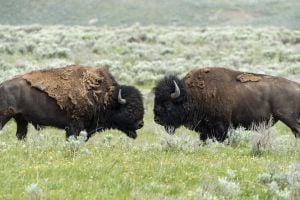
In May 2016, President Obama signed legislation naming the North American bison as America’s first national mammal. The bison is the largest land mammal in North America and one of the most common mammal species in Yellowstone. Yellowstone’s bison population fluctuates between 2,300 and 5,000 animals. There are two subpopulations of bison in the park, which are defined by where they gather for breeding. The northern herd breeds in Lamar Valley and the high plateaus surrounding it. The central herd breeds in Hayden Valley. For most of the year, mature male bison (bulls) live alone or with other bulls—except during the mating season, also called the rut.
The bison rut begins in late July and goes through August. Bulls display their dominance by bellowing, wallowing, and fighting other bulls. As part of the ritual, big bulls grunt, paw the ground, and sometimes lock horns as they challenge each other for domination and the females. Once a bull finds a female close to estrus, he stays by her side until she is ready to mate, then moves on to find another female. In winter, you might see icicle-laden bison warming themselves near the Upper Geyser Basin’s hot springs and thermal features.
Elk
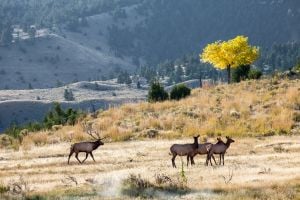
During the summer, elk can typically be spotted in the early morning grazing in Yellowstone’s valleys. Although summer is a great time to see elk, the best time is during the rut, which can start any time between mid-August and the beginning of September and lasts about a month. A common place to see elk is in Yellowstone’s northern range, in the Mammoth Hot Springs area and on the west side of the park near the Madison River.
Have you ever heard the bugle of the bull elk during the fall rut? It’s a thrilling yet haunting experience that draws thousands of visitors to Yellowstone each fall. It’s an experience unlike any other in the park, with elk bugling ranging from low, throaty sounds or a series of deep grunts to high-pitched whistles. Even before coming upon the herd, you hear the males’ bugling, a sound that starts like a low grunt and escalates into a shrill whistle.
Be aware that male elk can be highly aggressive during this time and charge cars and people. DO NOT approach on foot or in your vehicle. Keep at least 25 yards of distance, especially during the rut or in spring around mothers with new babies.
Bears
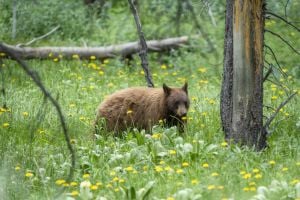
Yellowstone is home to two bear species: grizzly bears and black bears. Grizzly bears are typically larger than black bears and behave much more aggressively. In mid-summer, grizzly bears are most commonly seen in the meadows between Tower-Roosevelt and Canyon, and in the Hayden and Lamar valleys.
Although black bears, like grizzlies, are most active at night and in the early morning, visitors may spot them during the day, and also report seeing grizzlies in the high mountain meadows of Mount Washburn and on the east entrance road near Fishing Bridge. Keep an eye out for the cinnamon bear; this subspecies of black bear is often confused with the grizzly bear because of its brown, cinnamon-colored coat. Look for a hump between the shoulder blades on the top of the bear’s back; grizzlies have a hump, black bears do not.
Learn about essential bear safety in Yellowstone here.
Wolves
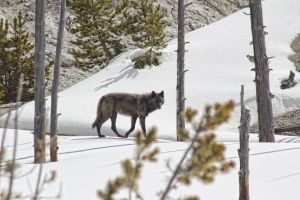
Although wolves roam the park, Lamar Valley offers the best chances of seeing them. In winter, when snow covers the meadows and hillsides, it is the best time to spot the wolves.
In 1995 and 1996, wolves were reintroduced to Yellowstone National Park, beginning with 31 gray wolves from Canada. With the presence of wolves in the park, Yellowstone now has all of the species of mammals known to be present in the park at the time of its creation for the first time since 1923.
Wolves are fascinating animals, and our Winter Wolf Discover package focuses on learning about wolves and other exciting wildlife along Yellowstone’s famous northern range. Led by a Yellowstone Forever field educator, this will be an experience of a lifetime. Yellowstone Forever field educators are among the best experts in Yellowstone and are passionate professionals with significant training who are dedicating their careers to this vital work. They live in the Yellowstone ecosystem; they work and train alongside park researchers and educators, and thus can provide accurate and exciting behind-the-scenes perspectives on the park’s natural and cultural history.
Birds
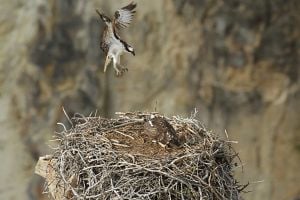
Ospreys, herons, ducks, and other waterfowl can be found in and around Yellowstone Lake and park rivers. From late August through early October, look for hawks in Hayden Valley. It only seems fitting that America’s first national park is home to the country’s national symbol. Bald eagles reside in Yellowstone year-round and are often seen around Yellowstone Lake in the summer months, where they prey on fish and waterfowl.
Beaver
While visiting Yellowstone, be sure to look for some of the park’s smaller wildlife, like the beaver. The beaver is a keystone species in Yellowstone and helps to build important habitat structures by damming and diverting streams for other animals in the park.

Coyote
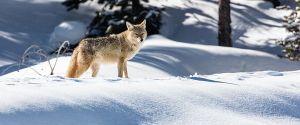
Coyotes are abundant throughout Yellowstone and are a common predator in the Greater Yellowstone ecosystem, often seen traveling through the park’s open meadows and valleys. The average lifespan of a coyote is 6 years; however, in the park, it can be as long as 13 years.
Wildlife Safety
Finally, keep a safe distance from all wildlife, which can be unpredictable and dangerous. Do not approach bears or wolves within 100 yards, and all other wildlife, like elk, deer, and coyotes, within 25 yards.
For A World of Unforgettable Experiences® available from Xanterra Travel Collection® and our sister companies, visit xanterra.com.
Want to experience Yellowstone in-depth? See what makes Yellowstone National Park a great place to work for a season or longer!